Surf's Up
Surf’s Up answers two questions before you leave: which nearby break looks best, and when to get in the water. It ranks daylight hours using each break’s wind exposure, swell, and tide, then groups them into useful surf windows.
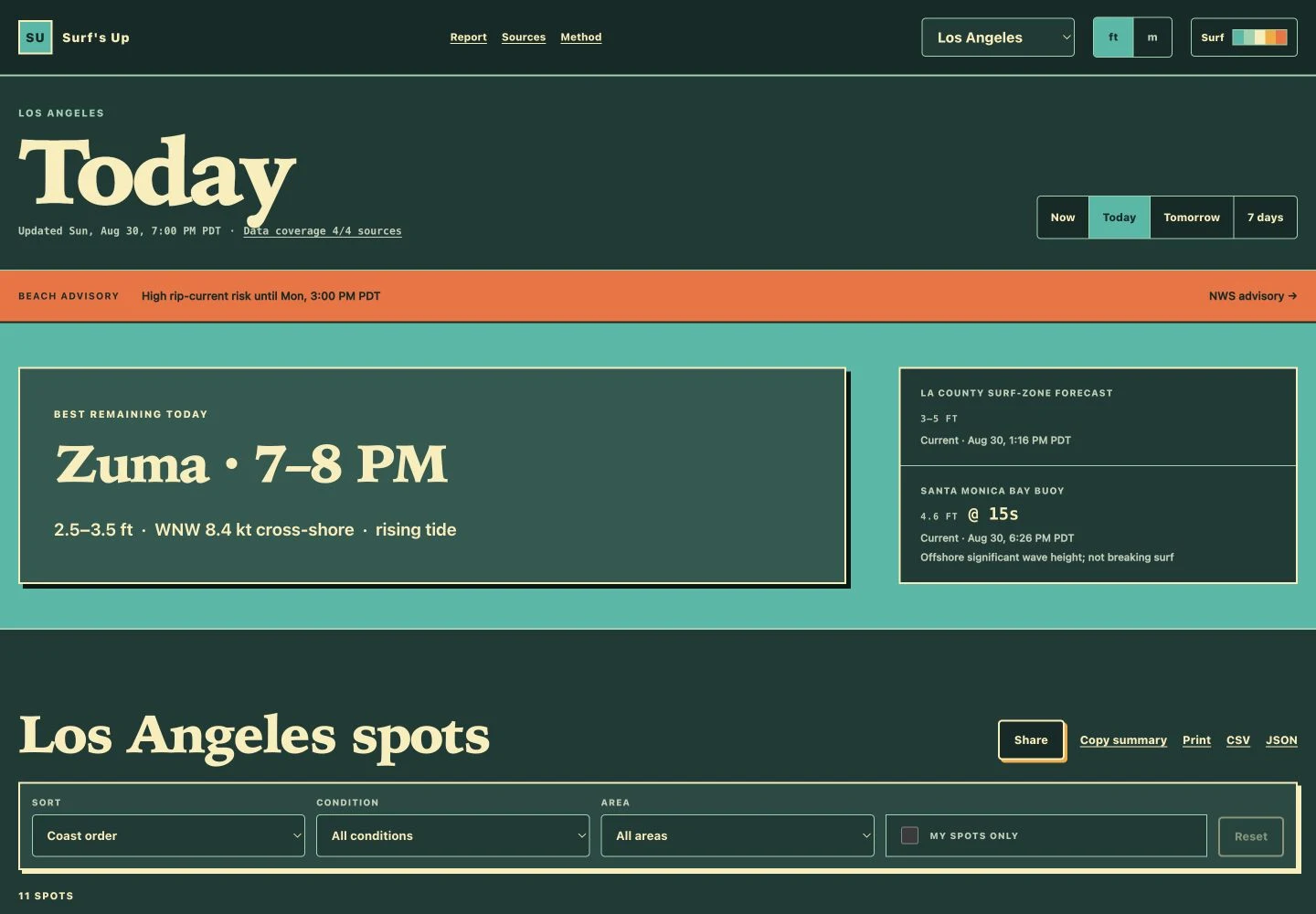
Zuma, 7–8 PM: the best remaining window, with the wind, swell, tide, and regional observations beside it.
The same wind means different surf
Wind direction is measured relative to the break’s orientation. A light offshore breeze can clean up one spot while the same weather puts chop on another. Wind carries the most weight; swell direction and period, estimated breaking-wave height, and the break’s tide preference complete the rating.
Each daylight hour is Good, Fair, or Poor. The report shows the contributing conditions alongside that judgment, so the reason for choosing one beach over another stays visible.
Recommend a window you can still use
Today excludes hours that have already passed in the break’s local time. Adjacent hours with similar conditions become a window, giving you time to arrive and surf instead of naming one supposedly perfect instant. Tomorrow and the seven-day view use the same comparison across nearby breaks.
Keep observations and forecasts legible
Los Angeles combines the NWS surf-zone forecast, the Santa Monica Bay buoy, tide predictions, and marine and wind models. They answer different questions: regional surf conditions, observed offshore swell, the tide cycle, and expected changes through the day.
Forecasts resolve to each break’s coordinates, with regional data filling gaps. The report retains the source and time of its readings, so an offshore observation and a modeled wave at the beach remain distinct pieces of the decision.